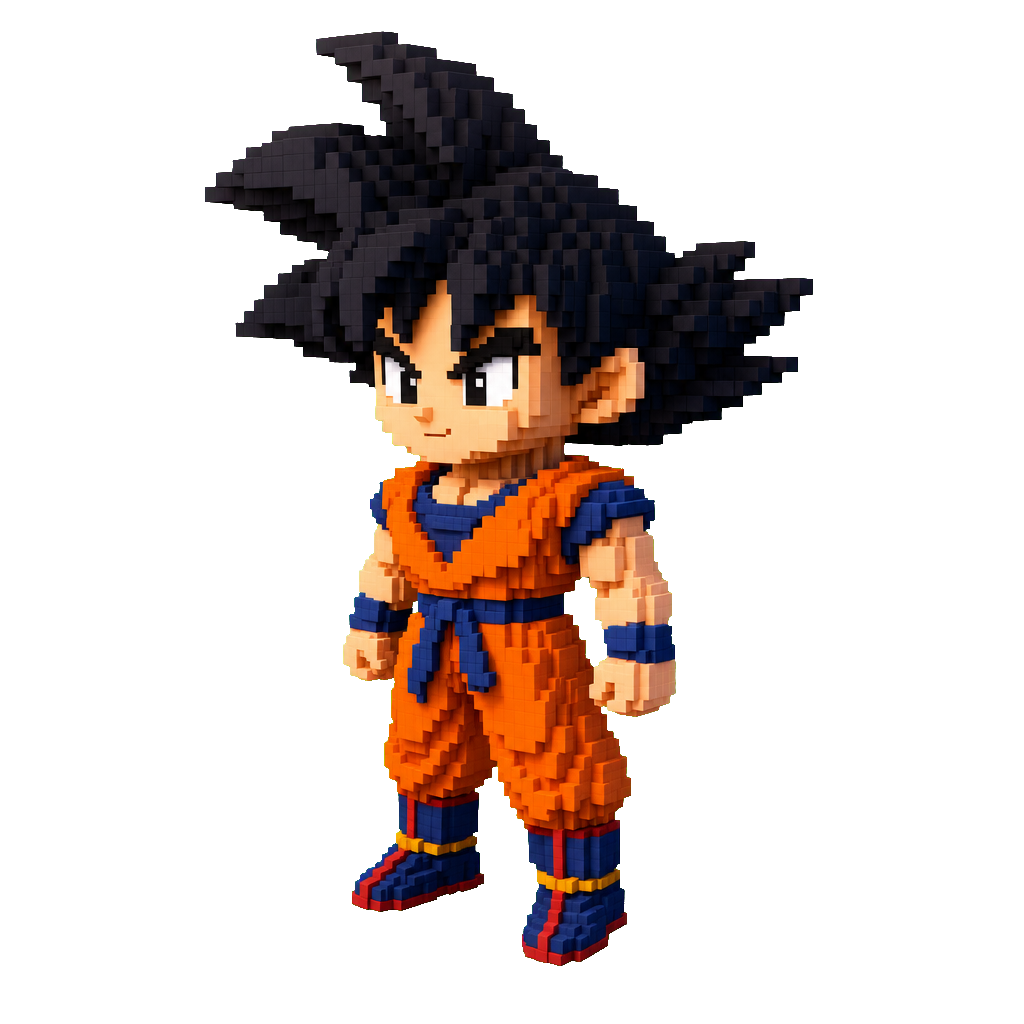
Your NFT is a worker. You activate it, put it on shift, and while it works, it competes for a share of payroll.
But Survivor adds something most NFT staking systems do not have:
Workers are not equal.
And workers get tired.
Every Survivor has permanent stats, permanent progression, and a place inside a workforce that grows in waves. There are no Common, Rare or Mythic labels deciding what the market should value. The numbers do that.
The premise
Survivors are workers on-chain.
Own one and nothing happens. That is intentional.
To earn, you put it to work. Activation places the NFT into the active workforce and gives it payroll weight based on its level, attributes and current efficiency. From that point, the worker competes against every other eligible Survivor for a share of the available payroll.
A wallet can own any number of Survivors, but only three may be active at once. The contract enforces that limit. Your workforce is not about activating everything you own. It is about deciding which three deserve the job.
The workforce arrives in waves
The entire Survivor workforce is not released at once. Workers enter the ecosystem in waves.
Each wave introduces new Survivors, new stat combinations, new competition for payroll and new opportunities on the secondary market. A worker from an early wave is not automatically better. A later worker is not automatically stronger because it is newer.
The stats still have to do the talking.
Four stats. No fake rarity.
Every Survivor begins with four permanent attributes. They are not decorative traits buried inside metadata. They are economic inputs read directly by the Work Protocol.
Raw working power.
Speed and execution.
Technical ability.
Endurance under load.
Two NFTs may look equally valuable and perform very differently. If one combination produces exceptional payroll weight, the market can discover what that worker is worth without a rarity label telling it what to think.
Rarity is not assigned.
It is discovered.
Workers get tired
A working day creates consequence. Every newly activated Survivor starts at full efficiency, then becomes less productive as the shift continues.
Stats determine how good a worker is. Fatigue determines how effectively that worker is currently performing. Together, they shape effective payroll weight.
After 24 hours, the shift is over. The worker must be activated again before it can resume earning.
Payroll: the number that matters
Inside the Work Protocol, the important relationship is simple:
There is no guaranteed paycheck and no fixed return simply for owning an NFT. Payroll is constrained by what the protocol actually holds. The amount available changes with economic activity, and each worker receives a share based on eligible work completed during the settlement period.
The Treasury determines what can be paid. The workforce determines who gets it.
The Treasury is the engine
Survivor is not designed around endlessly creating rewards because NFTs happen to exist. Activation costs are paid in $SURVIVOR and move through a defined economic circuit.
The activation price scales with the worker's permanent level. The current Level 1–10 USD targets are shown below; the contract converts the applicable target into $SURVIVOR using its freshness-checked price oracle.
Stats determine what the worker can produce, but they do not change what activation costs. Only level sets the USD target.
Forty percent is permanently burned. The remaining sixty percent enters Treasury and is processed equally into ETH and GAZZ for Payroll. Daily settlement allocates what is available across eligible workers.
No guaranteed APY. No assumption that rewards appear from nowhere.
The machine can only distribute what the machine can support.
Why we chose GAZZ
GAZZ was selected as a payroll asset because it can connect a worker's earnings to economic activity beyond Survivor itself.
Every trade on gazz.fun pays a flat 2% fee in ETH. That fee is split on-chain when it lands, and wallets holding at least 5,000 GAZZ receive a pro-rata share from trading activity across every market on the platform. Rewards accrue automatically, with no staking and no lockup.
That matters for the workforce. Survivors are paid partly in GAZZ, so a worker who accumulates and holds enough payroll can become eligible for this additional ETH revenue stream. GAZZ is therefore more than a second payout denomination: it gives long-term holders a way to participate in the wider platform activity that supports the asset.
Holder revenue still depends on gazz.fun trading volume, wallet eligibility and the platform's current distribution rules. It is variable participation, not a fixed return or guaranteed Survivor yield.
The worker remembers
Work does not disappear when a shift ends. Eligible time produces permanent XP, and XP produces levels. Level, XP and the Survivor’s original identity stay with the NFT through activation, claims and transfers.
A transfer deactivates an active worker and forfeits unsettled payroll work from the current period. It does not erase the worker’s accumulated XP or level. The new owner inherits the same worker and must activate it before it can earn again.
The NFT market becomes a labour market
This changes how people can value the collection. Buyers are not only asking what the NFT looks like. They are asking what the worker can do.
Strong workers can command premiums. Undervalued workers can be discovered. Different combinations of stats and levels create different strategies. Every wave expands the labour pool without automatically making older workers obsolete.
And Work is only the first protocol. The NFT is the persistent character. STR, DEX, INT and VIT can be interpreted by entirely different systems without changing the Survivor itself.
Same Survivor.
Same stats.
Different protocol. Different rules.
Most NFTs sit in your wallet.
Survivors have a job to do.
Buy the worker. Put their stats to work. Manage the shift. Build permanent progression. Compete for a share of payroll. Then decide who earns one of your three active seats.